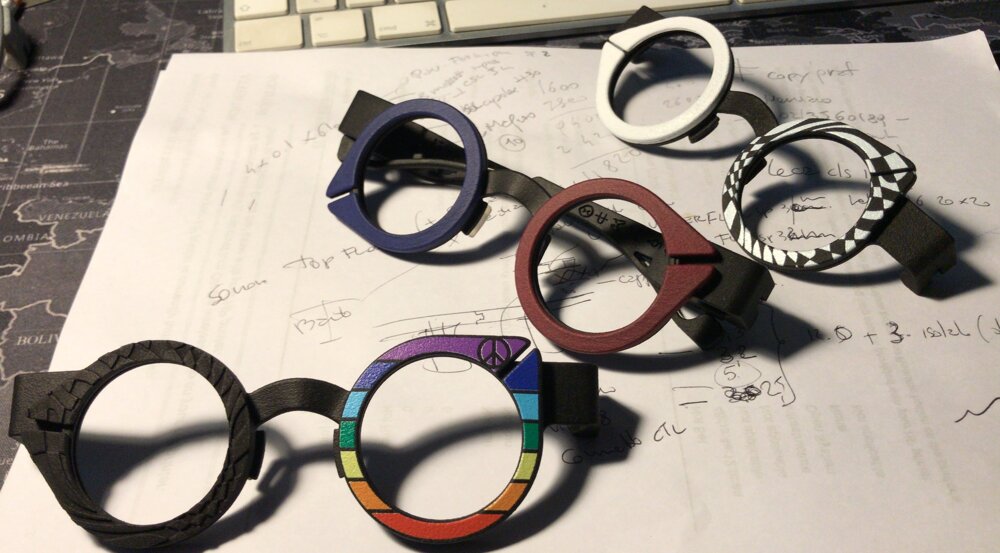

Your image our glasses
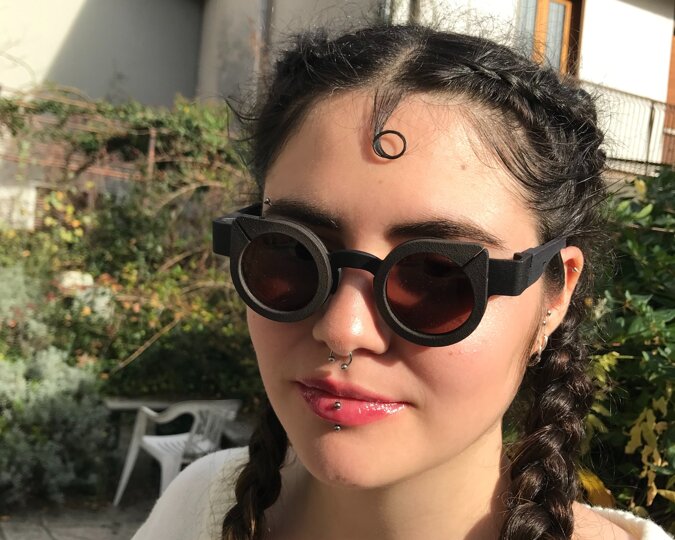
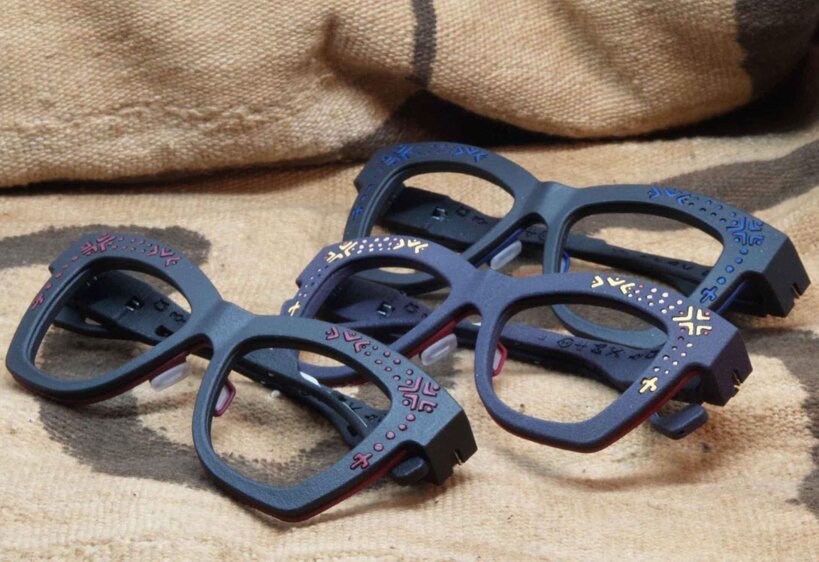
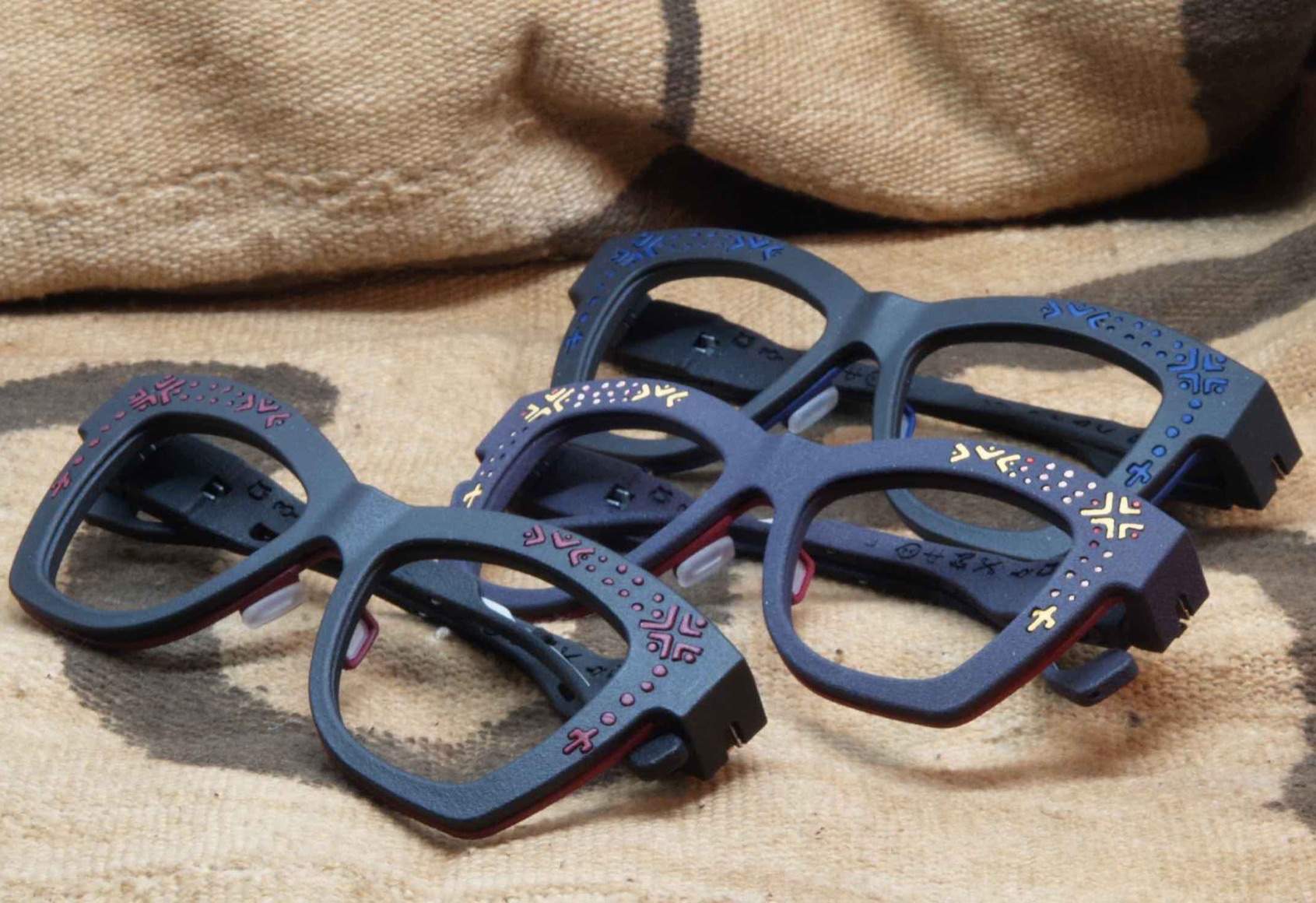
3D-printed glasses
Our eyewear frames are designed with great care; our designers (architects, designers and opticians-optometrists) combine all the skills needed to develop a product that is fit for purpose and with strong visual impact; constant curiosity and the drive to improve the product have led to innovative solutions and patents. Our frames are prototyped and thoroughly tested by our testers. Pre-series models undergo all tests required by EU regulations for CE marking. Some tests are extended well beyond regulatory requirements to better verify the durability and resistance to stress of your glasses.
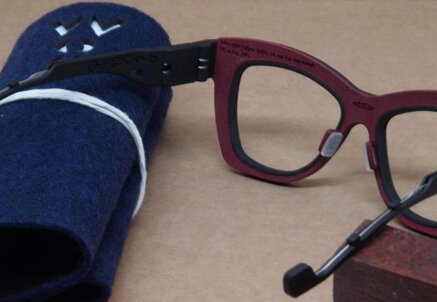
Screwless hinges, adjustable temple tips, soft and comfortable nose pads
Our frames use screwless hinges (patent pending no.102021000014378) with preset opening and closing positions, with automatic compensation of internal play for consistent performance over time. The opening and closing system is tested for 10,000 cycles with no issues found.
NFC chip in left auction terminals
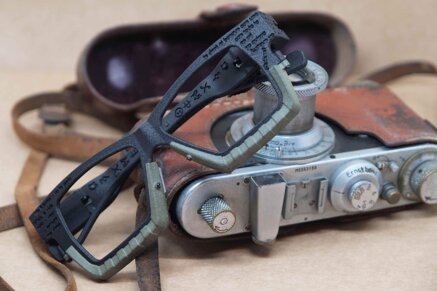
In our frames, an NFC chip is embedded in the left temple tip. This system, completely passive except when wirelessly powered by read/write devices, lets you always carry with your glasses the data your optician or the manufacturer has stored. For example, your optician can save your prescription, or a link to their website to request it. On some models we may store an NFT certificate that proves ownership of the frame also in its digital version, usable in the metaverse.
Extremely lightweight and durable frames
Our eyeglass frames are produced using 3D printing systems. This process saves large amounts of material that, with other production methods, would be wasted. Specifically, each frame uses exactly the material needed, with no offcuts; each frame can be produced in the quantity required for sales, avoiding overproduction and the build-up of unsold stock; each frame can also be customized, even one by one. The materials used are fully biocompatible and result in extremely light (a 3D-printed frame with SLS technology weighs on average 30% less than a comparable acetate product) and durable glasses: the durability tests carried out lasted 10 times longer than the number required by CE regulations.

Colors
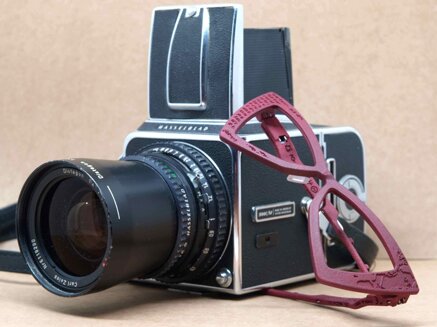
Our 3D-printed frames, due to the printing method used, are made of grey material and have matte, rough surfaces. The colours we offer, all non-toxic and applied by hot dip, therefore start from a grey base.
We offer them in light anthracite, black, blue, red, deep green, marbled yellow with grey speckles.
The colours, materials and printing technique create textured and chromatic finishes that are neither uniform nor consistent: this is a feature of our frames.
Shapes, details and tailored finishes
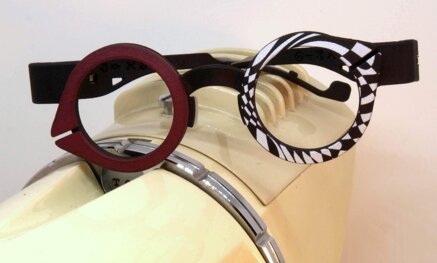
The printing techniques we use (SLS for frames in synthetic materials, chemical photo-blanking for steel or mixed frames) allow us to develop specific projects for every need. Design, prototyping and printing times are very short, and the number of pieces to be produced is irrelevant. We can therefore customize our products very quickly with minimal changes, or create entirely new projects to your specifications, whatever the level of detail of your design.